

LastBite | Shipped prototype
A retention loop for a food-sharing app
This case study has two versions.
- Role
- Product Designer
- Team
- Phase 1: 4 DesignersPhase 2: Solo Redesign
- Timeline
- Phase 1: Jan - Apr 2023Phase 2: Nov 2024
- Status
- Prototype
- Skills
- ResearchProduct DesignVisual SystemPrototyping
- Problem
- Phase 1 produced a marketplace app where students could list extra groceries, find food nearby, and arrange a pickup. The experience ended with the pickup, so the app gave them no reason to return or use it again.
- Contribution
- The concept began as a 4-person school project. I independently led Phase 2: 6 interviews, product strategy, interaction design, visual design, and prototype testing.
- Result
- I expanded LastBite from a one-time pickup flow into a prototype connecting food sharing, short lessons, and a virtual fridge.
Solution overview
Connect food sharing to everyday habits that bring students back.
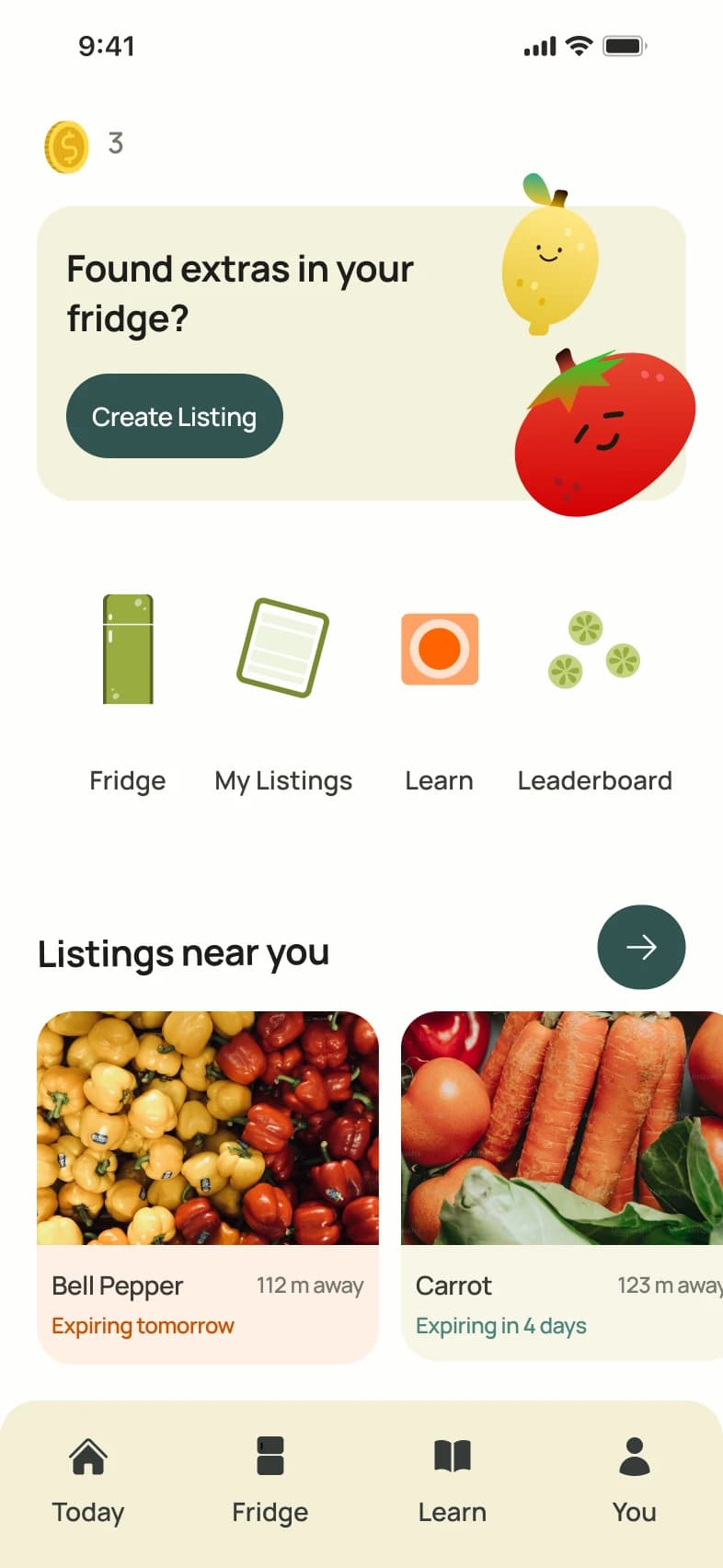
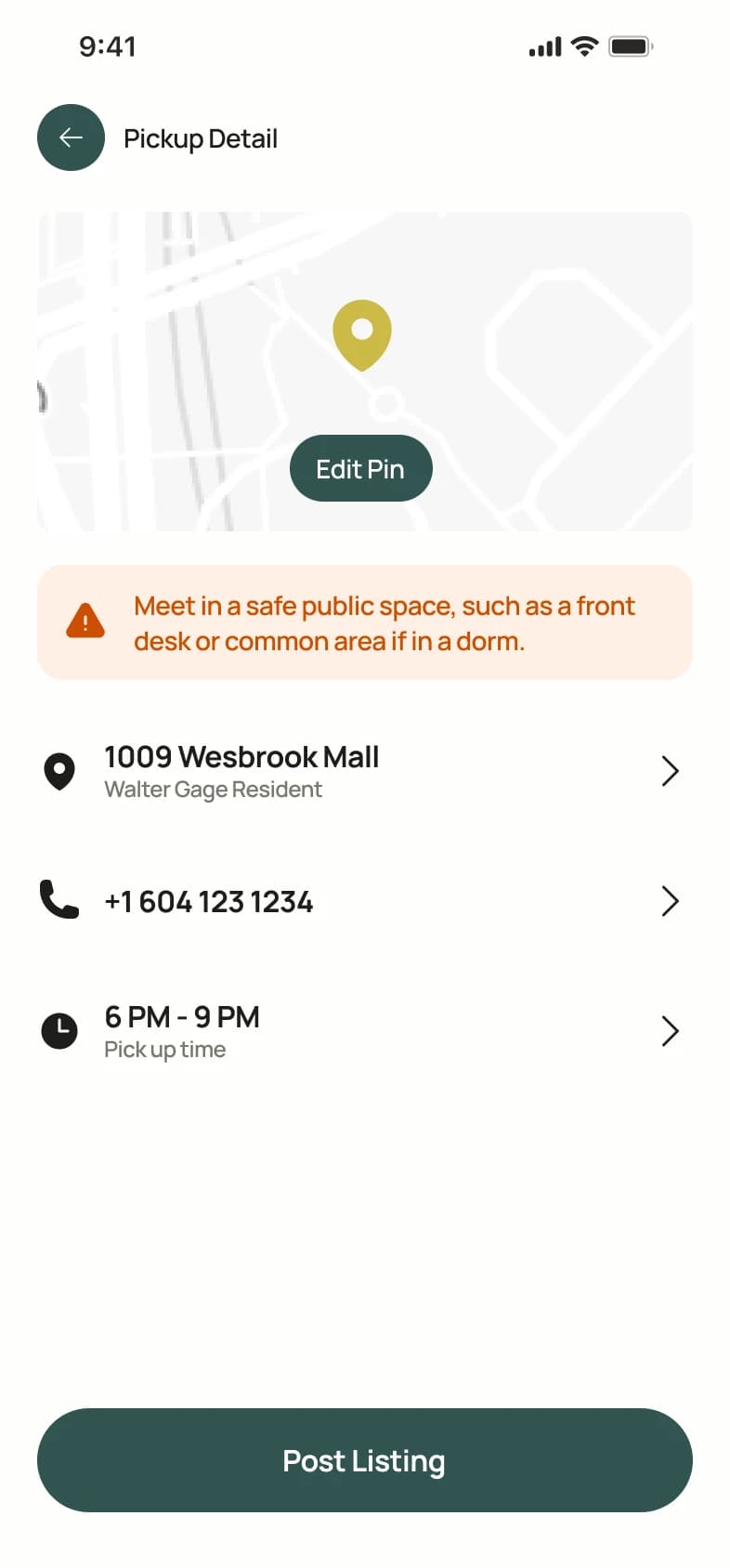
In Phase 2, I redesigned the original marketplace around 3 core actions: list extra groceries, find food nearby, and arrange a pickup.
Phase 2 extended LastBite beyond the pickup. I added short lessons on proper storage and food safety, plus simple meal tips, to help students build better food habits. A virtual fridge created value between exchanges. Coins were proposed as rewards for sharing and learning, then spent on fridge decorations.
Find nearby food
Share an item
Arrange a pickup
Phase 1 · School team
Phase 1 enabled food sharing but did not build lasting food habits.
The Phase 1 survey included 18 UBC students. Coursework often displaced cooking, groceries went unused, and community fridges were inconvenient to reach.
With 3 other designers, I helped shape a marketplace for listing extra food and arranging nearby pickups.
Once the food was gone, the experience ended.
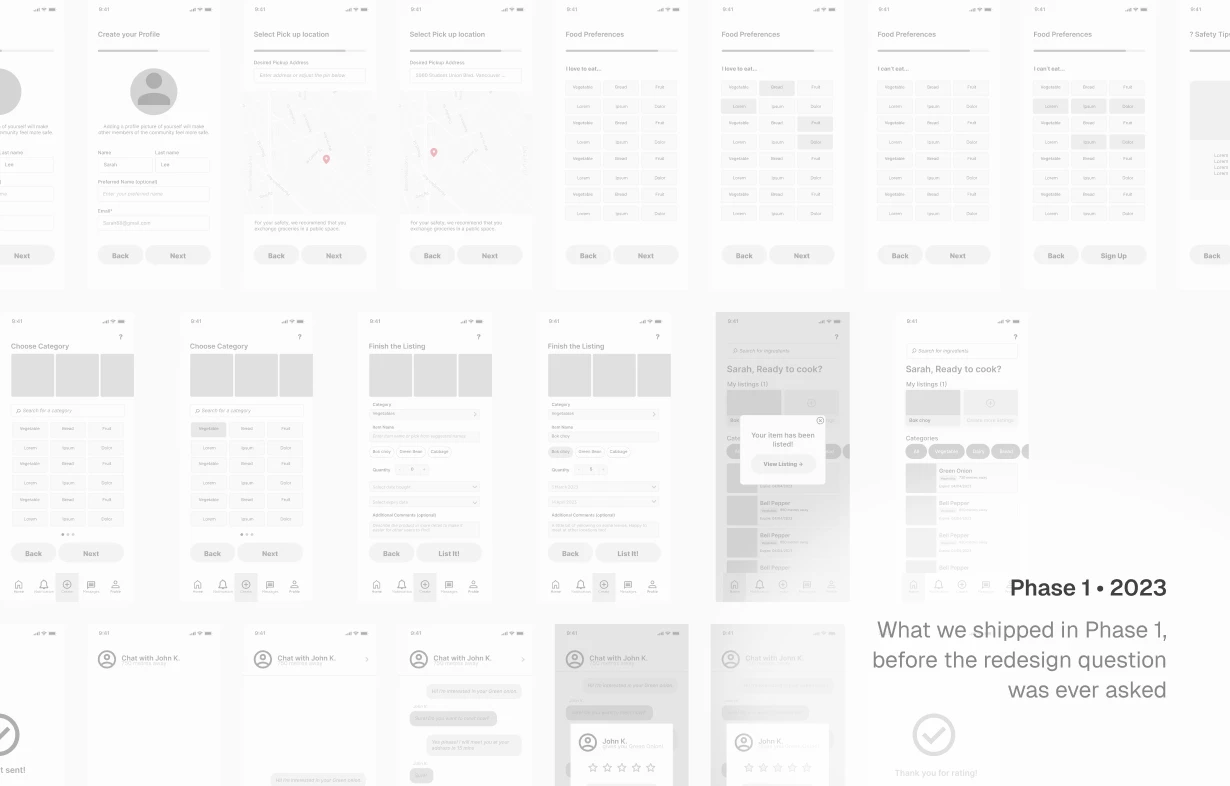
The original marketplace final product
Phase 2 · Independent
Reducing food waste meant helping students before food became urgent.
I returned in November 2024 and interviewed 6 students who lived on campus and cooked for themselves.
Key finding: Students thought of food sharing only when groceries were already going bad. Between those moments, the app disappeared from their routine.
I began asking what would make students return to LastBite and build better food habits between exchanges.
Original flow
List or find food
Pick up nearby
No reason to return
The experience ends at pickup.
Proposed retention loop
Share food or take a lesson
Earn coins and decorate the fridge
Return to share or learn
Proposed value between pickups.
Prototype testing
I tested whether the loop stayed useful between pickups.
I tested the original and redesigned prototypes with 6 students who cooked for themselves. I varied which version they tried first and gave them two scenarios.
Food is about to expire. Students listed it for pickup in both prototypes. I checked whether the redesign kept the sharing task easy to complete.
Nothing needs sharing. Students explored the app with nothing to share. I checked whether they found something useful without being directed to a feature.
Result: 5 of 6 students found a useful next action in Phase 2 without prompting and explained how they would use LastBite between pickups.
Limit: These sessions captured perceived value, not repeat use over time.
Decision 1
Turn a lesson backlog into a library students could explore.
The initial screen showed every lesson in one long list. Testers read it as a backlog they were expected to complete in order.
I replaced the list with swipeable cards that show one topic at a time, so students could explore without seeing the entire library as unfinished work.
5 of 6 testers preferred the cards.
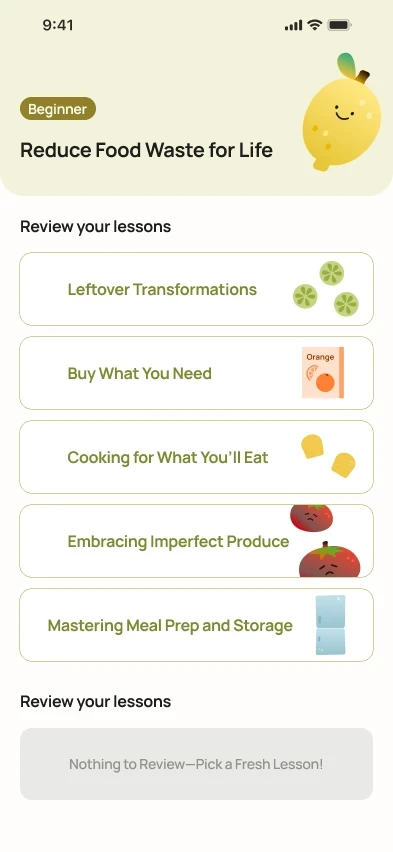
Before · Lesson list: felt like a backlog to complete in order
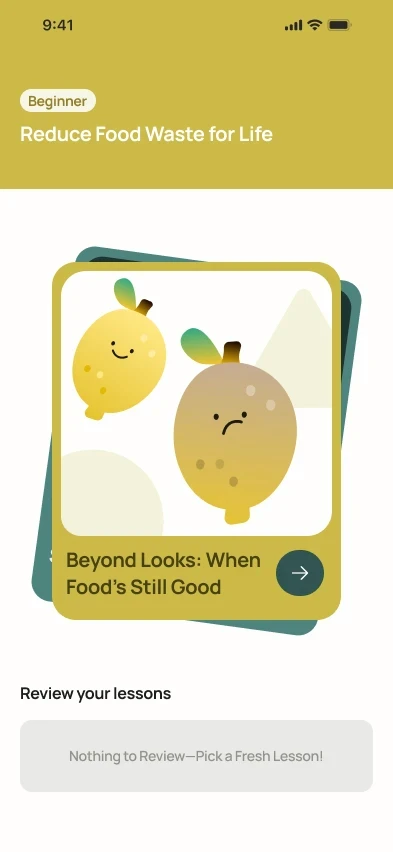
After · Lesson cards: encouraged exploration
Decision 2
Put the pickup action where people could find it.
In think-aloud testing, 3 of 6 participants could not find the pickup request. They also wanted more information about the person listing the food.
I made the pickup CTA sticky and moved profile details higher in the hierarchy. In the later test, 5 of 6 participants completed the sharing flow faster.
Profile details can help someone assess a listing. A real marketplace would still need food-safety rules, trust systems, and operational support.
Before · listing flow: the pickup action was hard to locate
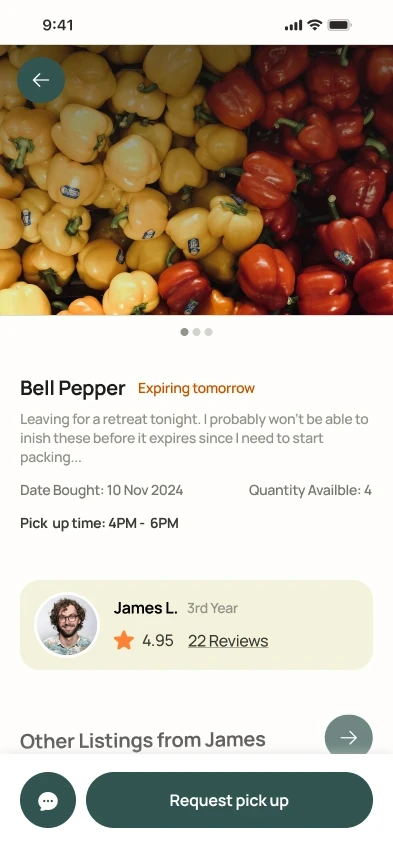
After · clearer hierarchy: the primary action and lister details are easier to scan
Decision 3
Tie the reward to the food.
I made the virtual fridge the destination for proposed coin rewards. The coins turn into decorations, giving sharing and lessons a visible payoff.
The metaphor keeps the reward tied to food. Because the fridge is optional, someone can still share groceries without entering the reward loop.
The virtual fridge: the proposed reward destination
Design System
One system across sharing, lessons, and rewards.
I built reusable components and custom illustrations across listing, lessons, and rewards. The system keeps core actions clear while giving the reward screens more personality.
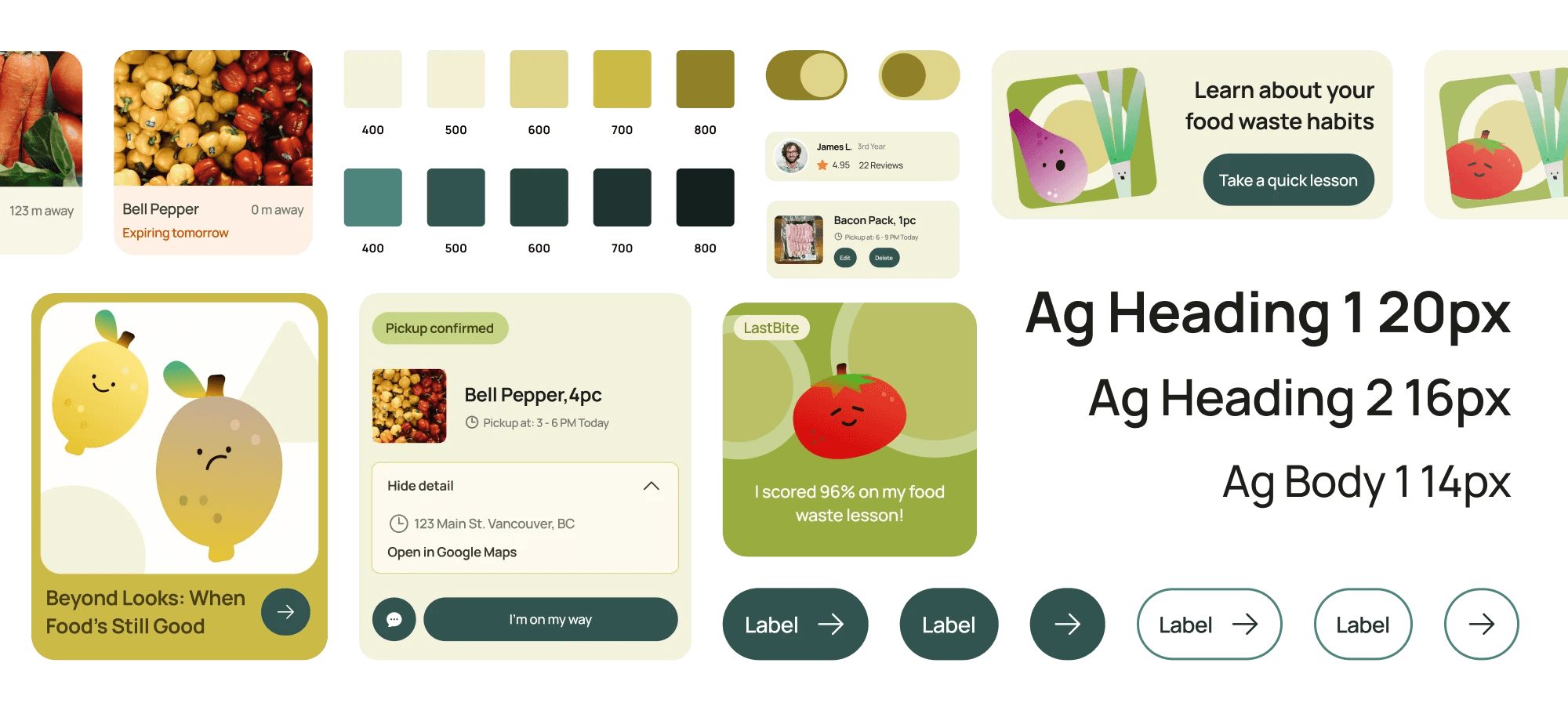
Reusable components
Reflection
Define what a meaningful return looks like.
LastBite taught me to question what I count as success. More app visits would not necessarily mean less food waste. If students stored food better and had less to give away, fewer pickups could be a good outcome. I would define the food habits I wanted to support before choosing how to measure engagement.
I also learned to be more selective about what I test together. Lessons, coins, and the fridge formed one concept, so interest in the whole experience could hide which parts were useful. Next time, I would test the lessons on their own before deciding what the rewards add.