
Capy.ai | Released film
Taking an existing brand into motion
- Role
- Graphic & Narrative Designer
- Team
- IllustratorMotion DesignerCapy client team
- Timeline
- 2026
- Status
- Client work · Released film
- Skills
- Concepting & StoryboardingIllustration DirectionUI & Visual Design
- Problem
- Capy needed a launch video for senior software engineers, an audience already fluent in the space who did not need the basics explained. Their Figma file had fallen behind the product, because most of the product lived in code.
- Contribution
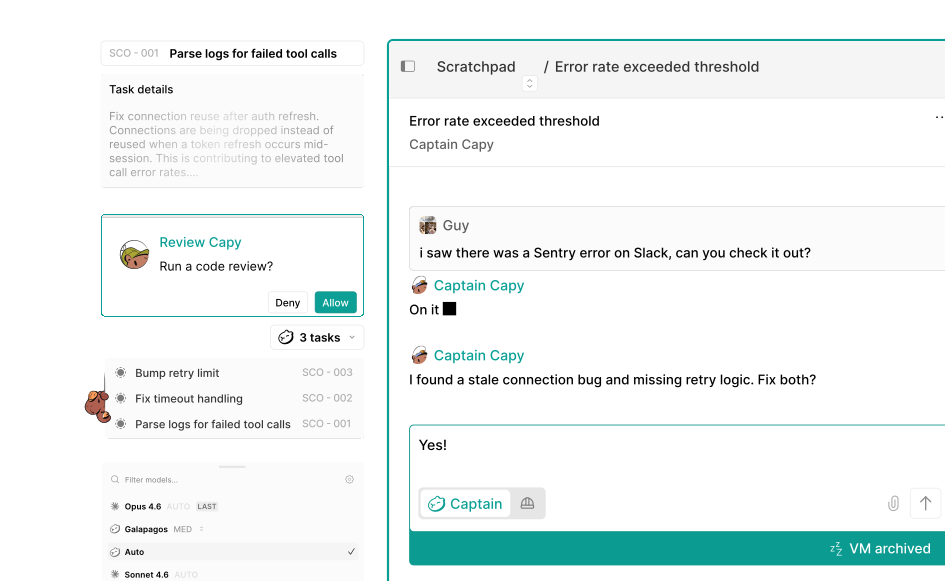
- I concepted and storyboarded the film, directed the illustration, and rebuilt every product screen it shows, working with an illustrator, a motion designer, and the Capy team.
- Result
- Full motion illustration, made inside the brand’s existing comic world
- Every product screen rebuilt 1:1 from the live product
- 122.6K views, 772 likes, and 450+ replies on @capydotai
Solution overview
Stay inside the comic world Capy already built, and draw the product exactly as it shipped.
We went with full motion. Capy’s brand already lived in a comic-style world, its mascot, its tone, its illustrations. Dropping in real actors would have broken the illusion the brand had already built.
Inside that world the product had to be literal. The film shows the real UI: task cards, the agent chat, the pull request flow, each screen rebuilt from the live product rather than the design file.
Capy’s logo lockup: the comic world the film had to stay inside
The ask
The audience knew the space already, and the design file had fallen behind the product.
Capy builds an AI coding agent for engineering teams. Their audience is senior software engineers, people already fluent in the tech world who don’t need the basics explained to them. There was a Figma file, but it hadn’t kept up with the product since most of the product lived in code.
Concepting
Understand the product first, then pitch the tone three ways.
Before touching a single frame, I sat down with the Capy team to actually understand the product: how the agents work, what makes it different, what it feels like to use. We settled what the film had to prove, and where its voice sat between serious enterprise and full comic.
I then pitched three tonal routes: full motion illustration, real human presenters, or a hybrid of both. Each concept is presented with a plot, sample storyboard (wireframes), and motion inspirations.
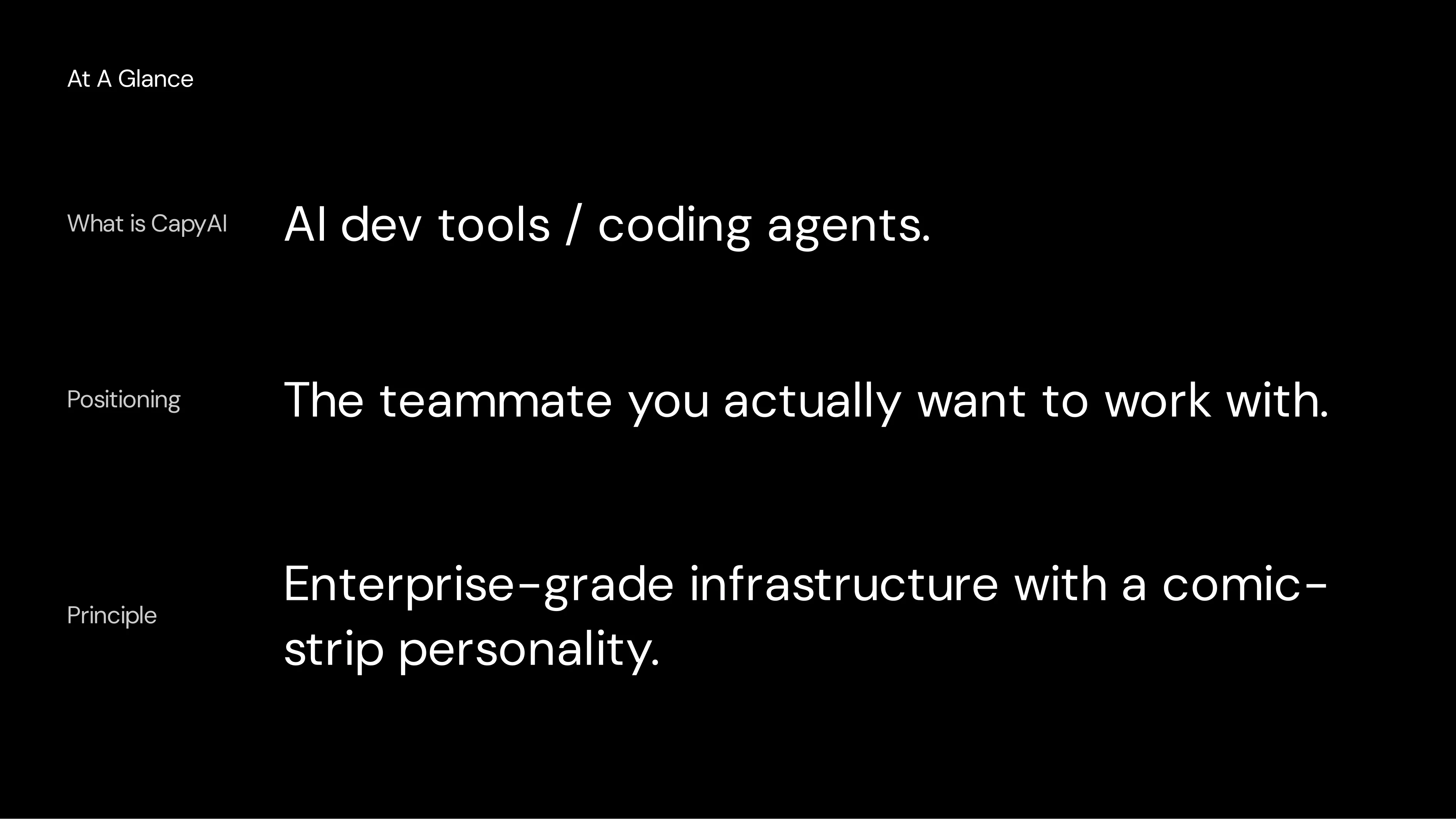
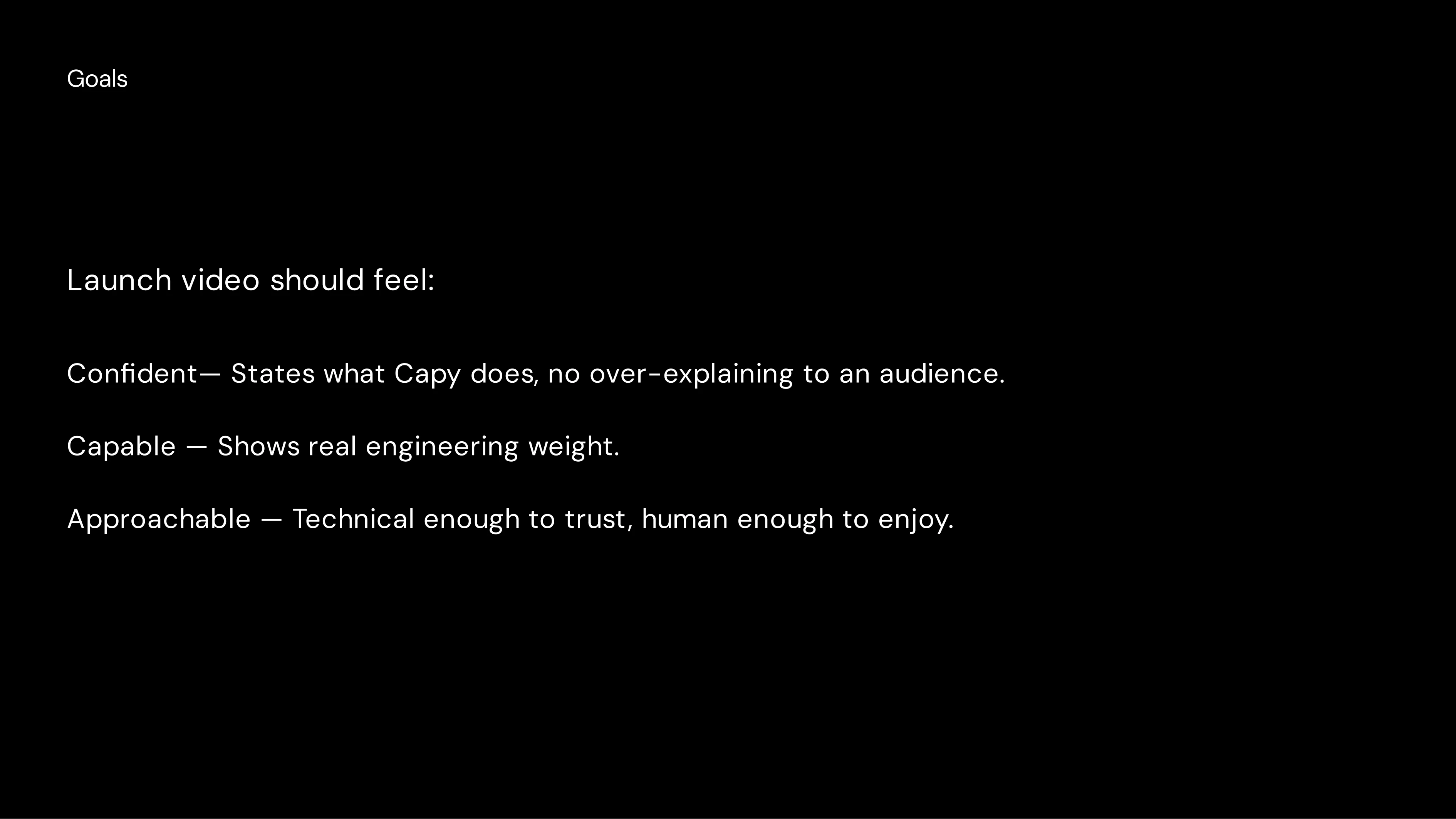
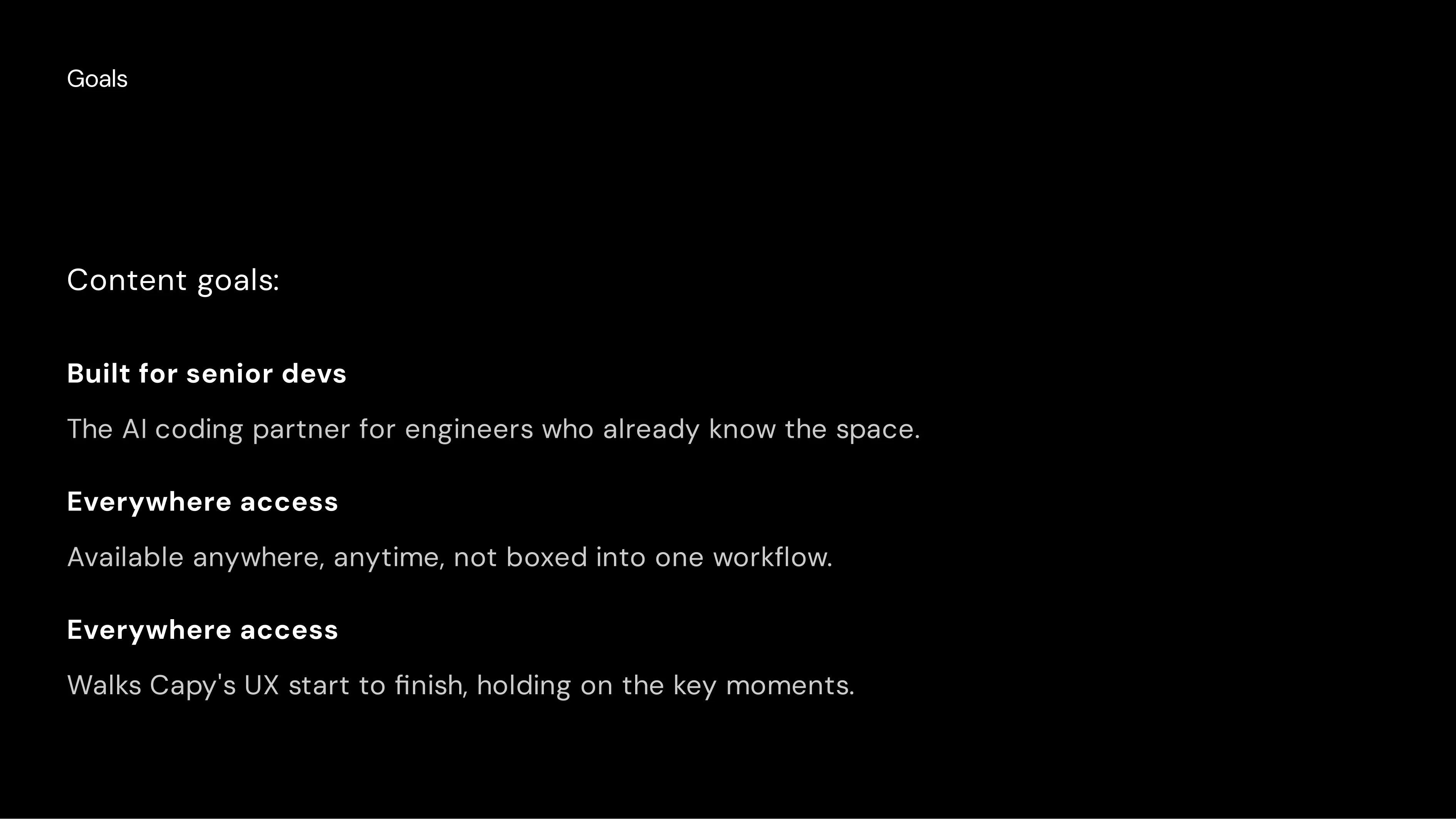
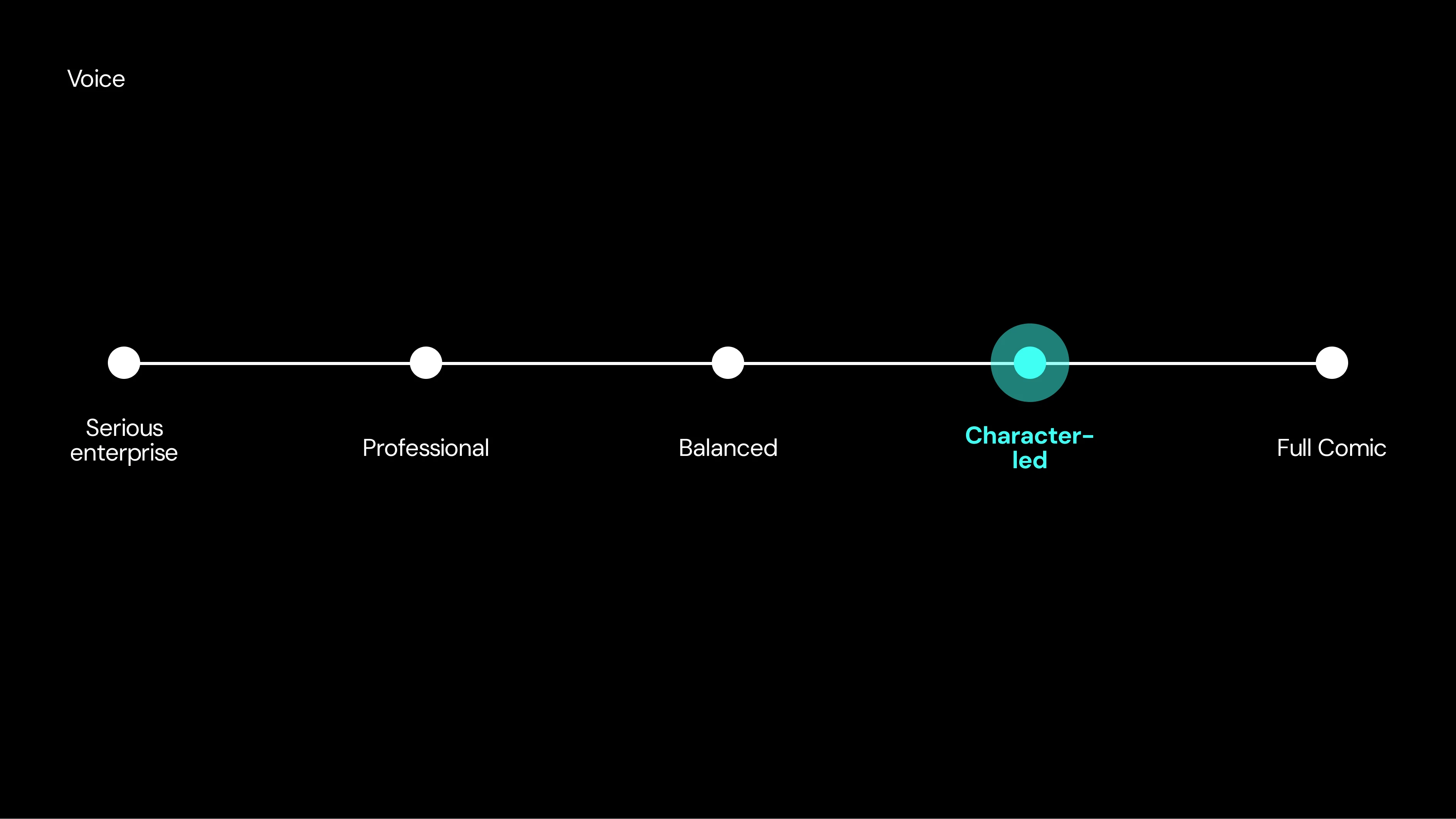
What Capy is, how it is positioned, and the principle underneath it
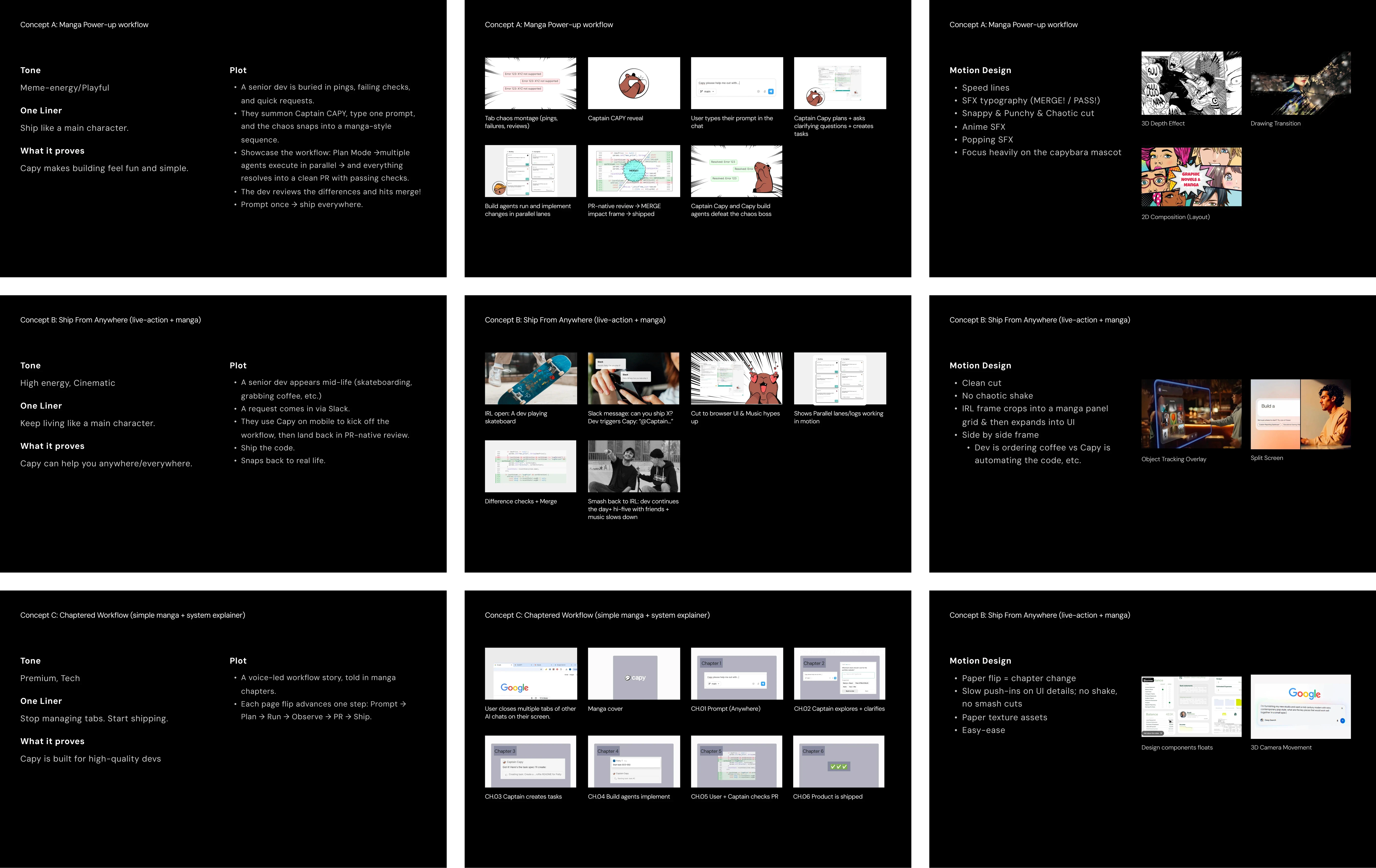
Three concepts: each with its tone, plot, storyboard wireframes, and motion references
Craft
Four decisions carried the film from the first key frame to the hand-off.
Pacing, checked before the assets existed. I mapped the video key frame by key frame before finalizing the assets, then checked the pacing by cutting the frames into a small slideshow video and brainstorming it with our motion designer.
AI for roughs only. I used generative AI to rough out early concepts and direction, and not for anything final, since AI-generated art carries real IP questions. The illustrator took those sketches, adjusted the composition, and pushed each one to hi-res, matching Capy’s existing illustration style and shading the whole way through.
The live product over the design file. Like a lot of early-stage teams, the client’s Figma file and design system hadn’t caught up to what had shipped, and both kept changing, so the product itself was the more reliable source. I skipped the file and rebuilt every screen directly from the live product, matching it 1:1.
Hand-off. Our motion designer was looped in early and stayed informed throughout. Every key frame carries motion notes wherever the visual alone doesn’t communicate enough, and assets are laid out cleanly.
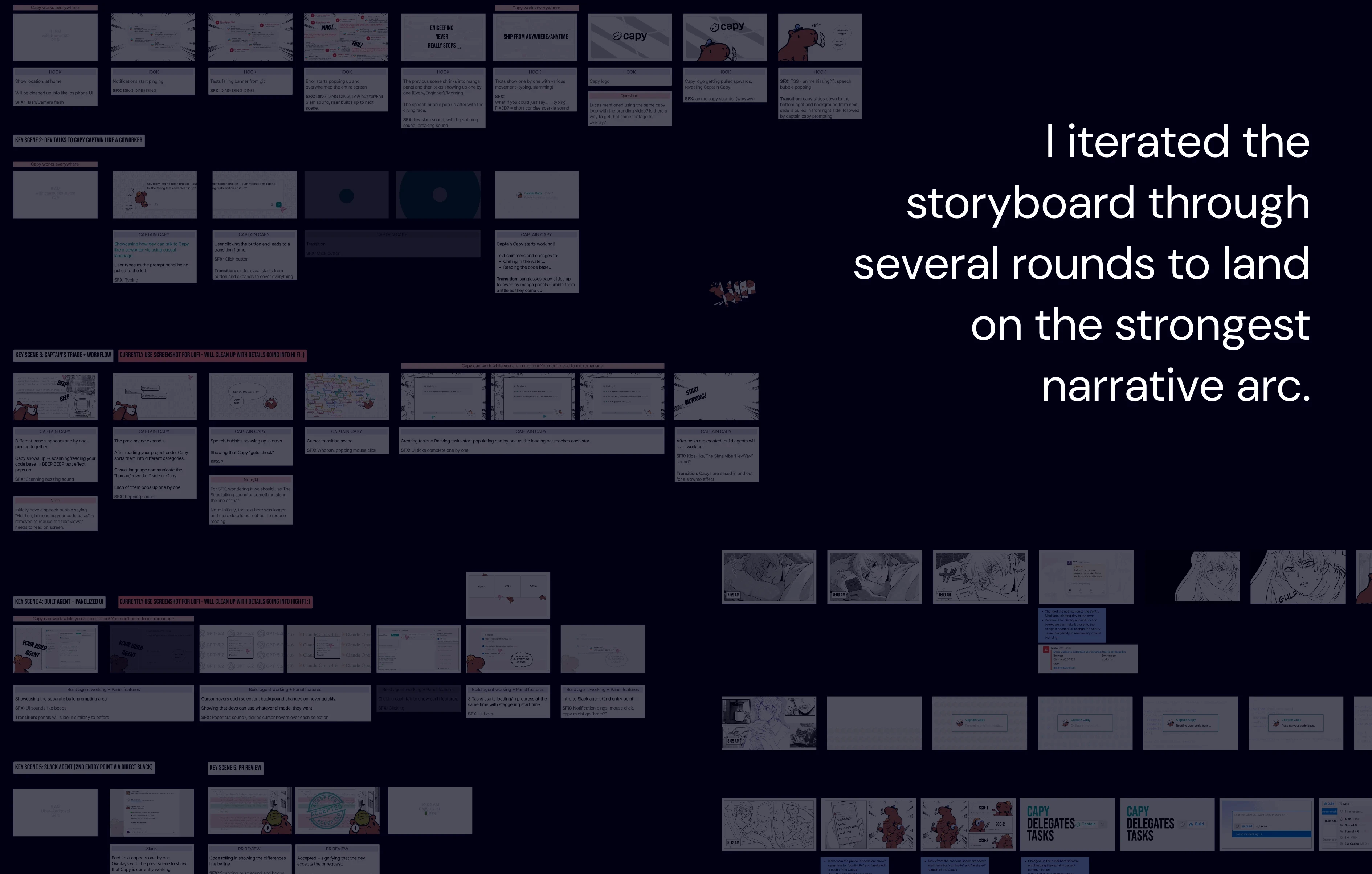
Storyboard: iterated through several rounds to land on the strongest narrative arc
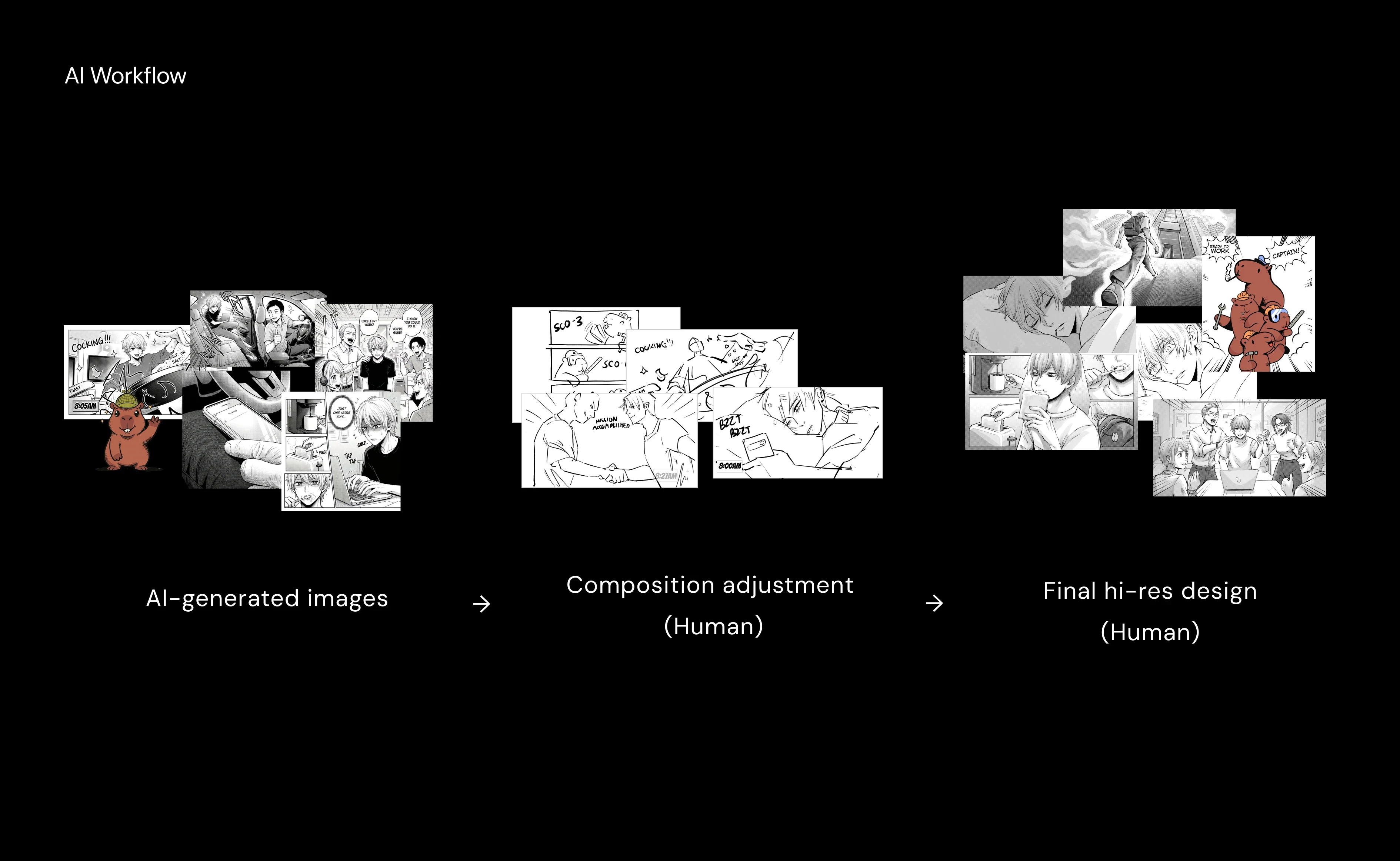
From rough concept to final frame: AI roughs, then composition and hi-res design by the illustrator
What shipped
A launch film that reached 122.6K views on Capy’s own channel.
These are the launch post’s numbers on @capydotai. They count how far the film travelled, and they belong to the whole team that made it.
- 122.6K
- views
- 772
- likes
- 450+
- replies
What I learned
Two calls I would make the same way again.
Check the file against the product. The Figma file was the obvious starting point and the wrong one. Going to the live product early is what kept the film’s screens accurate to what had actually shipped.
Draw the line on AI before you need it. Keeping generative AI to roughs, with the illustrator taking every final frame, meant the concepting stayed fast and nothing shipped with unclear rights attached.